Table of Contents▼
In This Article
- Alcohol and DJing: A Relationship Worth Examining
- Why DJs Drink While They Play
- What Playing Stone Sober Actually Feels Like
- The Technical Clarity You Gain Playing Sober
- Second-Guessing Yourself vs. Trusting Your Instincts
- Using a Clear Mind to Learn From Bad Sets
- The Physical and Mental Reset of Sober DJing
- Should Every DJ Try Sober DJing at Least Once?
- Practical Tips for Your First Sober DJ Gig
- Before the Gig
- During the Gig
- After the Gig
- The Sober DJ Journey: What to Expect Over Time
- The Critical Decision Framework for Sober DJing
How to DJ Sober and Still Have a Great Set: What Sober October Taught Me About Playing Without Alcohol
Alcohol and DJing have gone hand in hand since pretty much the beginning. But taking a break — even a short one — can reveal things about your playing you never noticed, and make you a sharper, more confident DJ in the process.
This guide is not a lecture. I've been the DJ who needed a drink to calm nerves before a set. I've been there and I'll probably be there again. The point of this guide is not to say you should never drink and DJ — it's to share what happens when you take a break and what you learn about yourself as a DJ when you do. The clarity you gain is worth the experiment, even if you go back to having a drink afterward.
Alcohol and DJing: A Relationship Worth Examining
Alcohol and DJing have gone hand in hand since pretty much the beginning, but taking a break can reveal things about your playing you never noticed.
I think it's a good thing to do, especially if you're working consistently and you're drinking on the job consistently — to just take some time out.
It's tough to talk about because everyone's different and everyone reacts to alcohol differently. But the one thing you have to keep in mind is that it is a mind-altering substance.
Why DJs Drink While They Play
A lot of DJs have maybe one or two drinks to ease the nerves, get into their set, and stop overthinking what they're doing.
It kind of gets you more in the zone. There's also something to be said about being on the same wavelength as the crowd that's had a little alcohol. You can feel a little bit more in tune with what's going on in the room and how to read the room.
The association between alcohol and DJing is so ingrained that many DJs don't even question it. A drink before a set feels like part of the ritual. But when you step back and examine it, the question becomes: what exactly is the drink doing for you? Is it actually improving your performance, or is it just making you feel more comfortable with the parts of DJing that make you nervous? The answer is almost always the latter — and that's a distinction worth understanding.
What Playing Stone Sober Actually Feels Like
When you get to that first gig stone sober, it's an experience.
You can definitely feel a difference as far as decision making, as far as second guessing yourself, as far as reading the crowd, or how easy or hard it might be. But just like anything else, once you do it for a little bit and kind of recalibrate and go through a couple of gigs, you kind of settle back in.
You remember how to do it without any alcohol in your system. I know the younger generations definitely don't drink as much as the older generations, so this might not apply as much. But there's still something to be said about going through a gig sober that can teach you a lot about yourself as a DJ.
If you decide to try sober DJing, give yourself at least two weeks to adjust. The first couple of gigs will feel noticeably different — you'll be hyper aware of every decision and prone to second-guessing. That's normal. Don't judge the experiment by the first night. Give yourself time to recalibrate. By gig three or four, you'll have settled into a new rhythm and can honestly assess whether it's working for you.
The Technical Clarity You Gain Playing Sober
Playing sober makes you more focused as a DJ and magnifies all the small intricacies that go into your performance.
If you look at your DJing from more of a technical perspective — your song selection, your transitions, how and when you EQ, when you use effects — all those things become sharper. When you're just left with you and your mind and no mind-altering substances, it definitely magnifies those things.
That's the one thing I kind of reflected back on a lot. I was way more aware of what I was doing and every little decision I made.
DJing, if you really whittle it down, is a lot of split-second decisions — planning out the next couple of songs, how and when you move faders and knobs, nudging certain songs. There are so many small decisions we always make over and over and over again.
When you have the cognitive ability to think about those more often and more sharply, it can either scare you or empower you.
Second-Guessing Yourself vs. Trusting Your Instincts
Being hyper aware of all the decisions you're making makes it so much easier to second guess yourself instead of going with your instincts.
I think that's a lot of what DJs mean when they say they need to settle their nerves — at least that's how I kind of understand it, at least for myself. But as you do it more often, you kind of regain that trust in your instincts. And it can be a pretty big confidence booster.
Not all of my gigs over the month of October went well or great. But when it goes really well, it feels great. And when it goes a little sideways, you have a better reference point of what you could have done better to avoid those situations — maybe what cleared the floor, or picking the wrong song, queuing it up in the wrong place.
The first few sober gigs feel harder because you're used to that slight cognitive buffer that alcohol provides. It numbs the sharp edges of doubt. Without it, every decision feels exposed. But what's actually happening is that you're hearing your own instincts clearly for the first time — including the doubt. The adjustment is learning to trust those instincts without the crutch. Once you do, those instincts become more reliable than they ever were with alcohol.
Using a Clear Mind to Learn From Bad Sets
Because you have a clearer mind at the end of the night, you have so much more information to make your next set better.
This is a big if — if you care enough to really reflect on it and try to learn from those errors in your judgment. You have so much more information to make your next set better.
If there's one big takeaway from my Sober October experience, it has to be that I need to stop thinking of calming the nerves as a must-have. Those nerves are kind of necessary. When I have a better understanding of where that comes from, I have a better understanding of how I can use it as a tool to make myself better.
When that crunch time hits and I might second guess myself, I know that my instincts more times than not will lead me in the right direction — just from experience and from knowing the rooms that I'm playing.
The Physical and Mental Reset of Sober DJing
This can be a scary thing and it took me at least two weeks to kind of settle into, but I'm happy that I did it.
Besides the mental things, physically it's obviously better for you because you are ingesting poison when you're drinking alcohol. This is no knock on any DJs that still drink when they play.
Even after October was done, if I'm going to drink, I've definitely been just easing into maybe one or two if that. It's just refreshing to have a different perspective on the way I do my work.
It gave me an appreciation for the experience I've gained over the years and a little bit more confidence in how I play and the decisions I make while I DJ. But it also made me realise that I'm far from perfect and there are going to be those bad sets.
When there are those bad sets, having a clear mind and a better understanding — it's kind of like having a superpower. It gives you a little bit more energy and a little bit more brain power to figure a way out of it and fix whatever happened, whether that's clearing the floor or playing the wrong song.
One of the biggest benefits of sober DJing is post-gig clarity. Take advantage of it. After every sober set, spend 10 minutes writing down: 1) Three decisions that worked well tonight. 2) One decision that didn't land as expected. 3) What you'll try differently next time. This practice, combined with a clear mind, compounds your learning faster than any number of drunk post-gig conversations ever could.
Should Every DJ Try Sober DJing at Least Once?
Having that clarity while playing is a positive, and it's something every DJ should do at least every once in a while.
Just to hit that reset button and realise how much you may or may not rely on a substance to get you through the evening. Again, this is no knock on any DJ that needs that drink to calm their nerves — I've definitely been there and I'll probably be there again.
But I'm appreciative of my October experience and I could see myself taking breaks like that more often.
Practical Tips for Your First Sober DJ Gig
If you're ready to try sober DJing, here's how to set yourself up for success.
Before the Gig
1. Have a non-alcoholic drink in your hand from the start. Hold a water, soda, or mocktail from the moment you arrive. It gives your hands something to do, makes you look like you're holding a drink, and keeps you hydrated. Nobody will know it's not alcohol unless you tell them.
2. Prepare more than usual. Since you won't have the cognitive buffer of alcohol, you'll be sharper but also more prone to overthinking. Offset this by preparing your first 5–7 tracks in advance. Knowing exactly what you're opening with removes one layer of decision-making anxiety.
3. Set an intention for the night. Before the gig, take 30 seconds to set a clear intention: "Tonight I'm going to trust my instincts and focus on reading the room." This replaces the ritual of having a drink with a ritual of mental preparation.
4. Time your arrival. Arrive early enough to do a proper sound check and get comfortable with the booth before anyone else arrives. Feeling physically settled in your space reduces the urge to reach for a drink.
During the Gig
5. Use the 4-7-8 breath before your set. Before you press play on your first track, step back from the decks and do one cycle of the 4-7-8 breath (breathe in 4 seconds, hold 7, out 8). This calms your nervous system without any substance.
6. Stay hydrated. Drink water between every 2–3 tracks. Alcohol dehydrates you, which contributes to fatigue and poor decision-making. Staying hydrated keeps your mind sharp through the whole set.
7. If nerves spike, welcome them. When you feel that wave of anxiety, don't fight it. Say to yourself: "Good. That means I care." Let the nervous energy become fuel for focus rather than a signal that you need a drink.
After the Gig
8. Reflect immediately. While the night is fresh, write down what worked and what didn't. Your clarity at this moment is a gift — most DJs lose it to a drink after packing down.
9. Be kind to yourself. Your first sober gig might feel awkward or overly self-conscious. That's normal. The second one will feel better. The tenth one will feel natural. Give yourself the same grace you'd give any DJ trying something new.
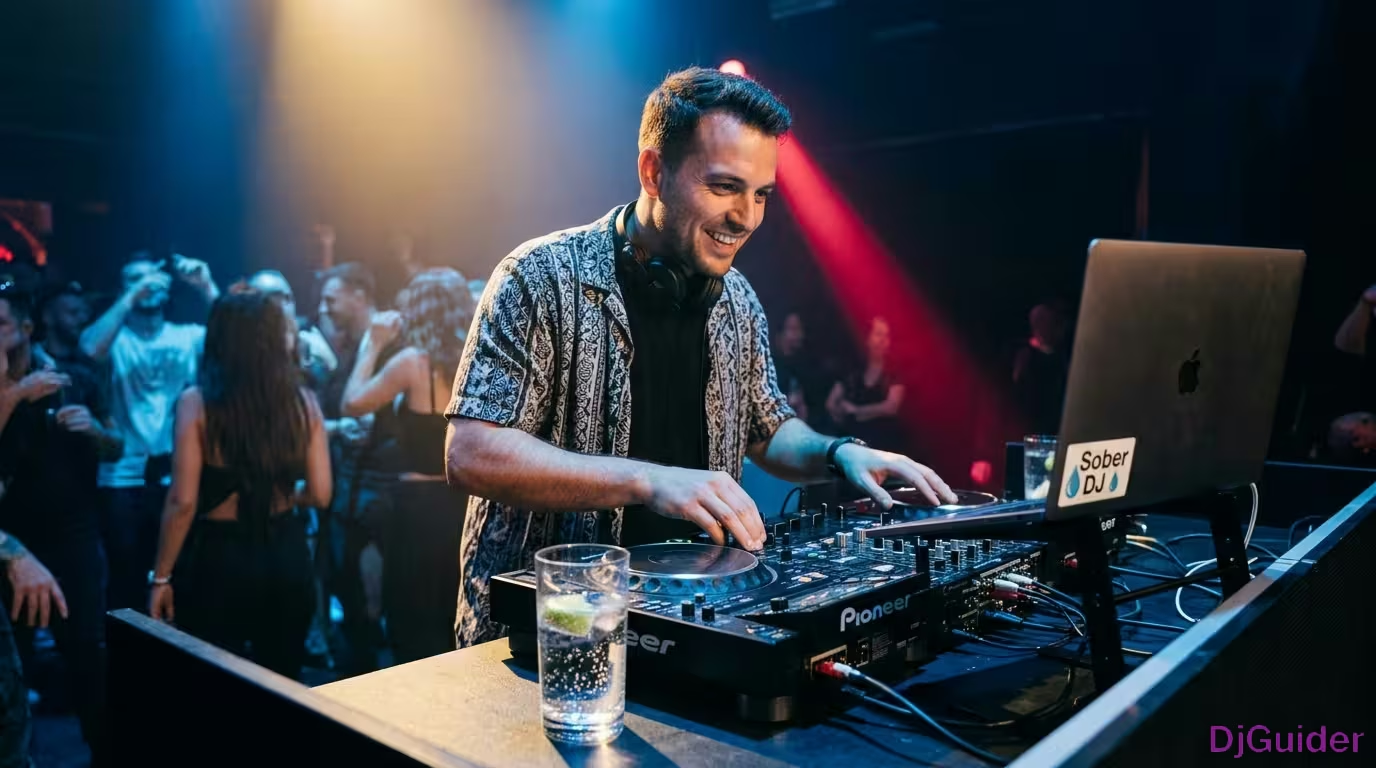
One of the most practical tricks for sober DJing is to always have a non-alcoholic drink visible in the booth. A bottle of water, a soda, a mocktail — it doesn't matter. It serves three purposes: 1) It gives your hands something to do, replacing the physical habit of holding a drink. 2) It makes you look like you're drinking to anyone watching, avoiding questions. 3) It keeps you hydrated, which directly impacts your cognitive performance for the whole night.
The Sober DJ Journey: What to Expect Over Time
| Timeframe | What It Feels Like | What's Happening |
|---|---|---|
| First gig | Hyper aware, second-guessing everything, feels unnatural | Your brain is adjusting to processing without the cognitive buffer of alcohol |
| First week | Decision-making feels exposed, instincts feel unreliable | You're hearing your own instincts clearly for the first time |
| Two weeks | Starting to settle, trusting some decisions again | Neural pathways are recalibrating to sober performance |
| One month | Instincts feel natural, confidence returning | You've built a new baseline — this is your actual skill level |
| Beyond | Clearer post-gig reflection, better learning from mistakes | The clarity compounds — each sober set teaches you more |
| Returning to occasional drinking | Different relationship with alcohol — you notice the difference | You have a choice now, not a habit |
The Critical Decision Framework for Sober DJing
| Situation | Sober DJ Response | Drunk DJ Pitfall |
|---|---|---|
| Crowd energy dipping | Trust your next track choice — you selected it for a reason | Panic-pick a random track |
| Transition feels rough | Note what went wrong and move on — overthinking is the enemy | Get flustered and compound the mistake |
| Someone requests a bad song | Politely deflect — you have full cognitive control | Feel pressured and play something that clears the floor |
| You make a mistake | Assess quickly, adjust, and keep going — it's one moment in a whole set | Get in your head and let one mistake spiral |
| End of the night | Reflect clearly on what worked and what didn't | Forget half the set, lose the learning opportunity |
Give yourself a sober DJing challenge. Maybe it's one gig. Maybe it's a week. Maybe it's a whole month. The goal isn't to prove you can do it — it's to learn what your playing looks and feels like without any filter. The clarity, the sharper decision-making, the post-gig reflection — these are gifts that keep giving even after you decide to have a drink again. Start with one gig. See what you discover about yourself as a DJ.