
Table of Contents▼
In This Article
- Pioneer PLX 1000 Specifications
- What Is a Super OEM Turntable?
- First Impressions
- The PLX 1000 Platter
- The Cartridge and Tonearm
- Pitch / Tempo Control
- Pitch Slider
- Pioneer PLX 1000 vs Stanton ST-150 Comparison
- Start/Stop Button Placement
- Build Quality
- Platter
- 33 and 45 Buttons
- Motor On/Off Switch
- Pitch Section
- Brake Adjustment Knobs
- Pop-up Lights
- Tonearm Assembly
- Back Connections
- Conclusion
- Pioneer PLX 1000 — The No-Frills Choice
- Stanton ST-150 — The Feature-Rich Choice
- My Take
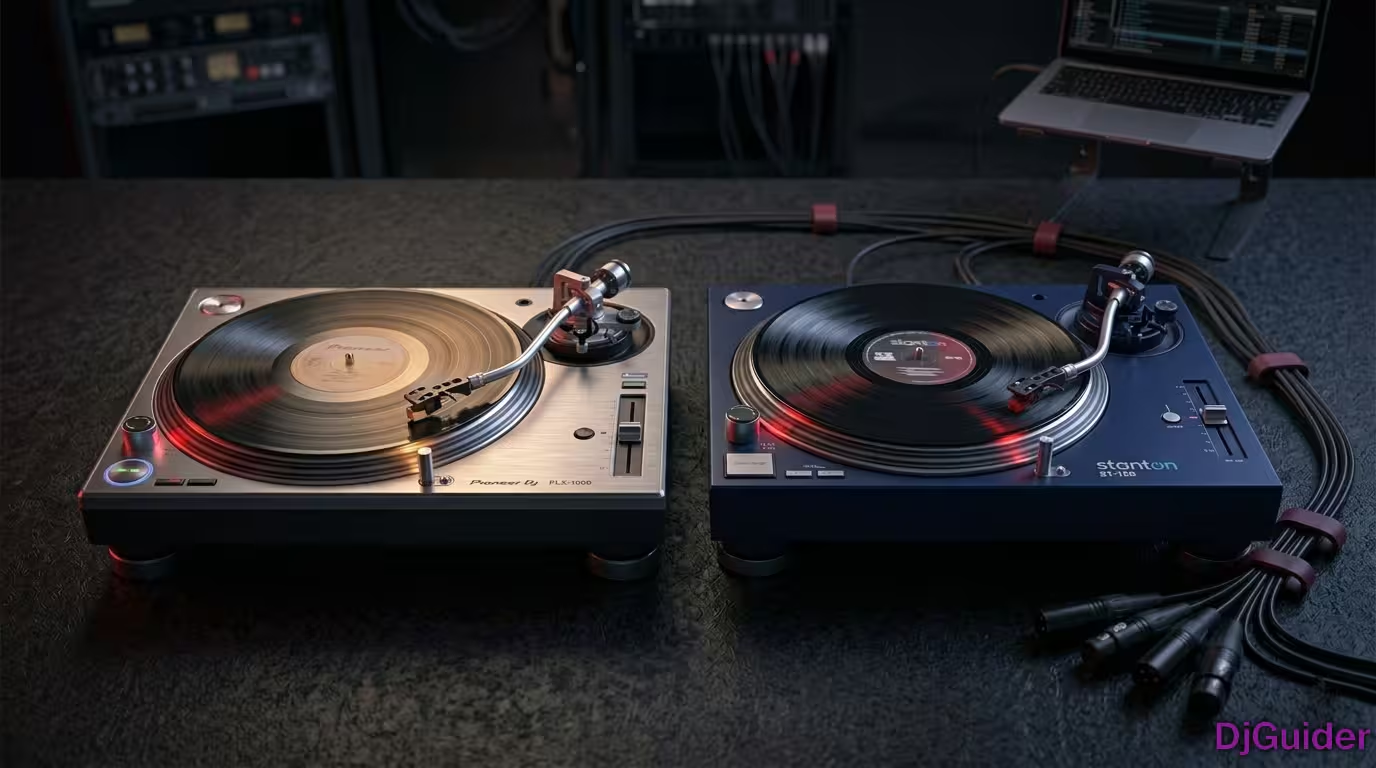
Both the Pioneer PLX 1000 and Stanton ST-150 share the same Super OEM DNA — the same motor and core components. This comparison covers:
- Super OEM Design: Same motor, same underpinnings across multiple brands
- Build Quality: PLX 1000 has a better brushed metal finish; ST-150 is more utilitarian
- Features: ST-150 has reverse, key lock, adjustable brake, internal preamp — PLX 1000 is no-frills
- Pitch Slider: PLX 1000's is smooth, metal, and sturdy; ST-150's is plastic and wobbly
- Price: Both around $700 — the PLX 1000 costs more for fewer features
- Verdict: PLX 1000 for Technics fans who want a familiar layout; ST-150 for those who want more features
I'm here to give you guys a rundown review and a comparison of the Pioneer PLX 1000 professional vinyl analog turntable. This is a new take on a tried and true design — basically, we have the DNA from a Super OEM turntable.
Pioneer PLX 1000 Specifications
| Spec | Detail |
|---|---|
| Width | 17.83 inches |
| Height | 6.26 inches |
| Depth | 13.9 inches |
| Weight | 32.19 lbs |
What Is a Super OEM Turntable?
Super OEM refers to a hand-picked design that emerged about 10+ years ago. Multiple turntables share the same underpinnings, the same DNA, the same motor, and the same strong, lasting gear.
| Brand | Model |
|---|---|
| Reloop | RP-6000, RP-7000, RP-8000 |
| Stanton | ST-150, STR8-150, T.120S |
| Pioneer | PLX 1000 |
| Audio-Technica | AT-LP1240 / LP140XP |
The Pioneer brand takes that further — or shall I say a little bit lesser — by trimming it down and making it almost a carbon copy of what the Technics 1200 used to be, with the minimalistic features of just starting and stopping, and the on/off power switch.
The Pioneer doesn't have any of the Super OEM extra features like start/stop brake adjustment, an onboard preamp to turn phono level into line level, or reverse play. It has a no-frills, basic setup with a really strong motor, a really good tonearm, and solid build quality.
First Impressions
My first impressions of the Pioneer PLX 1000 are very good. You have a nice brushed metal top face that is very reminiscent of the Pioneer CDJ lineup. It really, really looks nice.
It's a really heavy turntable. The sides and the underneath are all plastic — it doesn't have that rubberized coating like some of the other Super OEM turntables. But it does have a nice reassuring feel and has nice thick wide feet on it, making it very good for dampening and reducing vibration.
The PLX 1000 Platter
You have a solid platter with a very, very strong motor underneath — the same motor found in the other Super OEM lineup. The turntable comes with a nice slip mat and a rubber one underneath.
You have a nice, sturdy start/stop button — similar feel and layout to the Technics when you're looking at the corners of the unit. You also have:
- Start and stop button (feels nice, reassuring)
- Somewhat recessed power on-off switch
- 33 and 45 RPM buttons
- Pop-up target light with LED inside (won't burn out as quickly as Technics, but not replaceable like Super OEM)
The Cartridge and Tonearm
You have a headshell that comes with it — you need to mount your cartridge or get a cartridge-needle combo such as the Ortofon Concorde.
The tonearm assembly is a mixture of Super OEM design and something new from Pioneer. They have most of the componentry from the Super OEM model, but with more dampening material and insulation inside the tonearm for better sound quality.
| Tonearm Feature | Detail |
|---|---|
| Height adjustment | Easy to dial in |
| Counterweight | Nice, solid |
| Anti-skate | Easy to set |
| Dampening | More material than standard Super OEM |
Pitch / Tempo Control
Next, you have the pitch tempo range button to change between +/- 8%, +/- 16%, and +/- 50%. It's LED, so it lights up to tell you which range you're currently in.
Pitch Slider
The pitch slider is nice and smooth — no zero-end dead or anything like that. It's a nice smooth throw all the way through. It's all metal and feels really good. You also have a reset button to bring it back to zero no matter where you are in the mix.
Pioneer PLX 1000 vs Stanton ST-150 Comparison
We'll do a quick comparison and let you see all the differences between the Pioneer PLX 1000 and another flagship turntable — the Stanton ST-150.
The Stanton ST-150 has been out on the block for about 10 years now. It's a tried and true design. The Super OEM DNA is inside both the ST-150 and the PLX 1000 — they both have the same strong motor and the same basic underpinnings.
| Feature | Pioneer PLX 1000 | Stanton ST-150 |
|---|---|---|
| Super OEM motor | ✓ | ✓ |
| Start/Stop buttons | Single | Dual (top + bottom) |
| Finish | Brushed metal | Midnight blue |
| Pitch slider | Metal, smooth | Plastic, wobbly |
| Pitch ranges | 8%, 16%, 50% | 8%, 25%, 50% |
| Reverse play | — | ✓ |
| Key lock | — | ✓ |
| Adjustable brake | — | ✓ |
| Internal preamp | — | ✓ |
| Digital output | — | ✓ |
| Removable RCA | ✓ | ✓ |
| Ground post | ✓ | — (internal ground) |
| Price | ~$700 | ~$800 |
| Technics layout | ✓ Very close | Different |
Start/Stop Button Placement
The first thing you'll notice: there is a single start and stop button on the Pioneer, and dual start and stop buttons on most Super OEM models (both lower and upper corners). This allows you to turn it to battle style and have start/stop buttons near the bottom for performance features.
On the Pioneer PLX, you'll notice they have the 45 adapter so you can play 45 records, or you can remove it to put DICERS in for MIDI control — something you usually can't do on other Super OEM models.
Build Quality
The PLX 1000 has a nice brushed metal finish very reminiscent of the Pioneer CDJ lineup. The ST-150 has a midnight blue finish — nothing special — and I've heard reports of it chipping a bit easier. The finish on the Pioneer PLX looks a little bit better and a little bit nicer overall.
Platter
The platters are basically the same, except the platter on the PLX 1000 is sunken in a little bit — more reminiscent of the Technics 1200 — whereas the platter on most Super OEM turntables is raised slightly above the top of the deck.
33 and 45 Buttons
| Feature | PLX 1000 | ST-150 |
|---|---|---|
| Shape | Rectangular | Round |
| Feel | Nice click | Nice click |
| Indicators | LED for range | Speed indicators |
Motor On/Off Switch
Both have it. The PLX 1000's is more needled and has a grip surface.
Pitch Section
| Feature | PLX 1000 | ST-150 |
|---|---|---|
| Slider | Metal, sturdy | Plastic, wobbly |
| Center click | No | No |
| Reset button | ✓ | ✓ |
| Ranges | 8%, 16%, 50% | 8%, 25%, 50% |
| Reverse | — | ✓ |
| Key lock | — | ✓ |
The Stanton ST-150's pitch slider is plastic and has a wobbly feel. There's nothing wrong with it — you can adjust pitch just fine — but it doesn't feel as good as the Technics or the Pioneer PLX 1000.
Brake Adjustment Knobs
The ST-150 has start and stop brake adjustment knobs — you can turn the knob to change how the motor starts or slows down. A really cool feature. The Pioneer PLX 1000, being a Technics clone, doesn't have any of those extra bells and whistles.
Pop-up Lights
| Feature | PLX 1000 | ST-150 |
|---|---|---|
| Type | LED, built-in | Removable, replaceable |
| Replaceable | Not easily | Yes (eBay, etc.) |
| Design | Similar to Technics 1200 | Standard Super OEM |
Tonearm Assembly
| Feature | PLX 1000 | ST-150 |
|---|---|---|
| Counterweight | Different style | Standard Super OEM |
| Height adjustment | Sunken-in, Technics-like | Raised above lid |
| Anti-skate knob | Bigger | Smaller |
| Dampening | More material | Standard |
The tonearm assembly is actually the same design in many ways, but if you look closer, the PLX 1000 has a different style of counterweight, a sunken-in height adjustment band, and a bigger anti-skate adjustment knob — more reminiscent of Technics design and flavor.
Pioneer has strayed a bit away from the traditional Super OEM tonearm design and has more material in their tonearm for dampening and higher quality sound.
Back Connections
| Feature | PLX 1000 | ST-150 |
|---|---|---|
| RCA cables | Removable | Removable |
| Ground | Ground post | Internal ground |
| Preamp | Phono only | Phono + Line switch |
| Digital out | — | ✓ |
| Power cable | Removable IEC | Standard |
| Kensington lock | ✓ | ✓ |
The Pioneer PLX 1000 is very simple — very close to what the Technics had to offer, except it has removable phono RCA. You can use any RCA cable you need. It's far recessed in there so you don't need special 45 or 90-degree adapter cables.
The Stanton has a phone/line select lever switch so you can choose whether to use the internal preamp or not, and has internal grounding so there's no ground post.
Conclusion
| Aspect | Winner |
|---|---|
| Build quality/finish | PLX 1000 (brushed metal) |
| Pitch slider feel | PLX 1000 (metal, smooth) |
| Features | ST-150 (reverse, key lock, brake, preamp) |
| Technics familiarity | PLX 1000 |
| Value for money | ST-150 (more features for similar price) |
| Motor | Tie (same Super OEM) |
Pioneer PLX 1000 — The No-Frills Choice
The Pioneer PLX 1000 is a very, very formidable turntable. It's a nice replacement or first DJ turntable for anyone who wants a high-quality turntable with a familiar Technics 1200 layout and doesn't want all the extra bells and whistles.
| Pros | Cons |
|---|---|
| Familiar Technics 1200 layout and feel | Only base features — no extras |
| Great build quality and construction | High price point (~$700) |
| Very strong motor | Fewer features than competitors at same price |
| Solid tonearm assembly | Plastic sides and bottom |
| Brushed metal finish | — |
Stanton ST-150 — The Feature-Rich Choice
The Stanton ST-150 offers more features for a similar price. It has reverse play, key lock, adjustable brake, internal preamp, and digital output — all things the PLX 1000 lacks.
| Pros | Cons |
|---|---|
| More features than PLX 1000 | Plastic pitch slider (wobbly feel) |
| Same strong Super OEM motor | Finish can chip |
| Adjustable brake control | Midnight blue finish isn't as premium |
| Reverse play and key lock | — |
| Internal preamp (line/phono switch) | — |
My Take
If you want a no-frills, familiar Technics 1200 layout with great build quality, the Pioneer PLX 1000 is an excellent turntable for you. But if you want more features from your turntable — reverse, key lock, adjustable brake, internal preamp — the Stanton ST-150 (or another Super OEM model) gives you more bang for your buck.